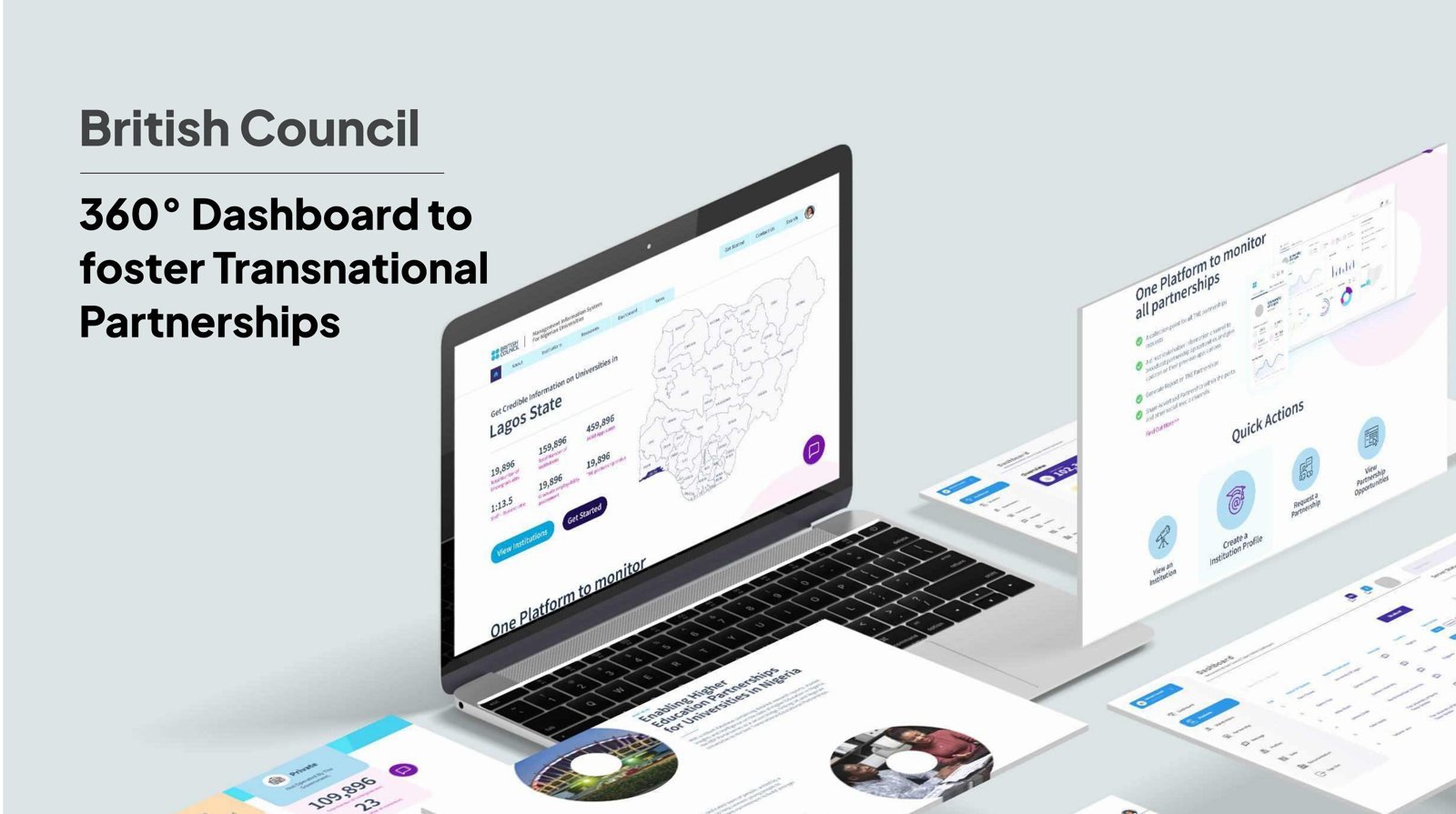
An analog process meeting rising demand
British Council research showed huge demand for tertiary education in Nigeria and strong interest from UK universities, but partnerships ran on email, spreadsheets and unstructured data. There was no central place to see opportunities, manage applications or share research.
Four user types, one fragmented workflow
University representatives missed partnership calls; research officers in 30+ states had no structured way to upload data; students couldn't find verified programme data; administrators handled everything by hand.
- 30+ state research officers with very different digital skills
- Sensitive institutional and personal data
- Early budget gaps: no UX writer or visual designer at first
20+ interviews across 30 states
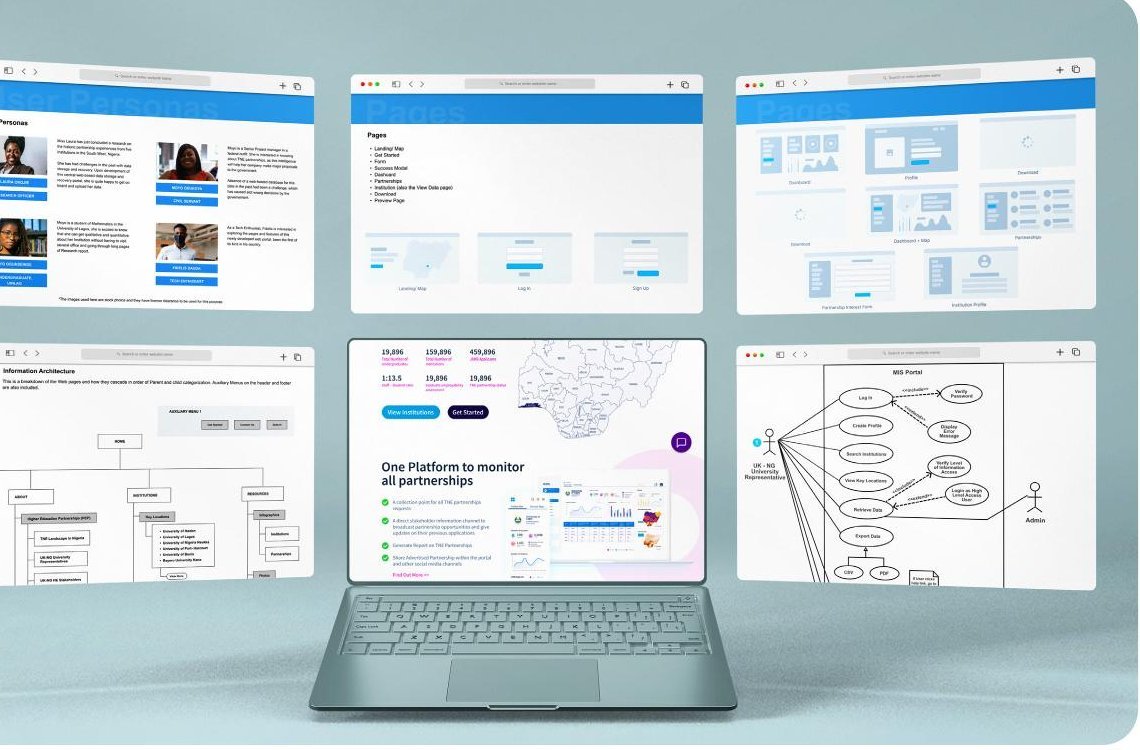
I led scoping and prioritisation workshops with the client, then ran 20+ interviews and workshops with British Council reps and university stakeholders. I mapped institutional workflows and pain points (data loss, duplicate requests, slow applications) and defined three personas: University Representative, Research Officer and University Student.
Role-based, map-led and accessible
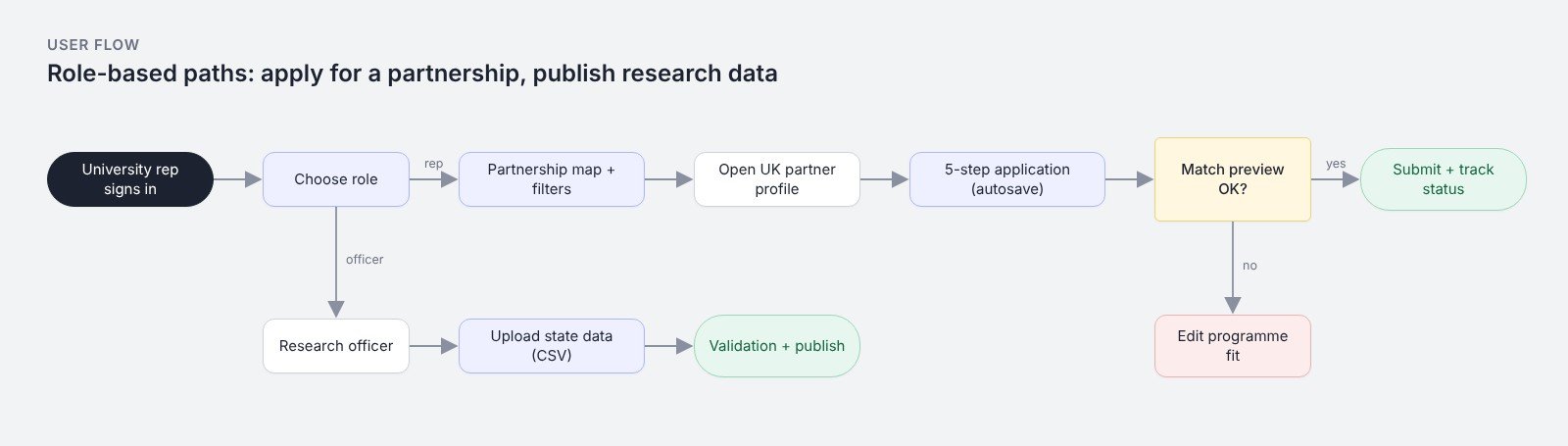
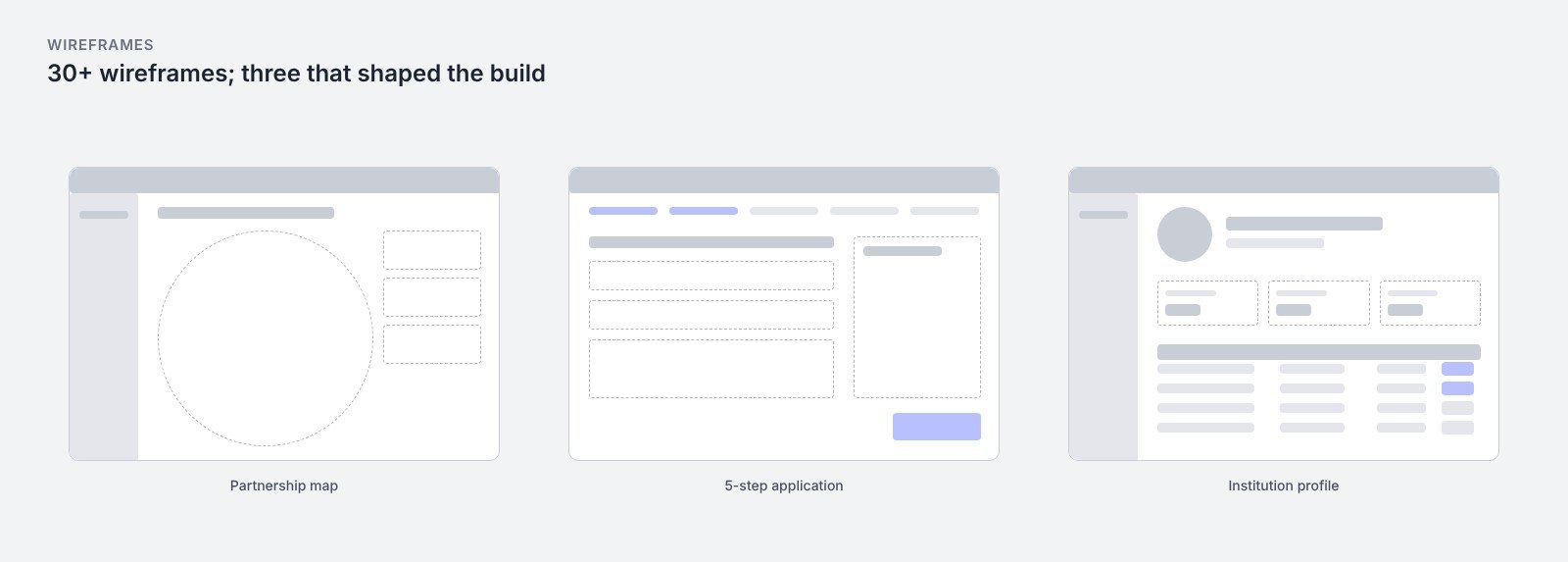
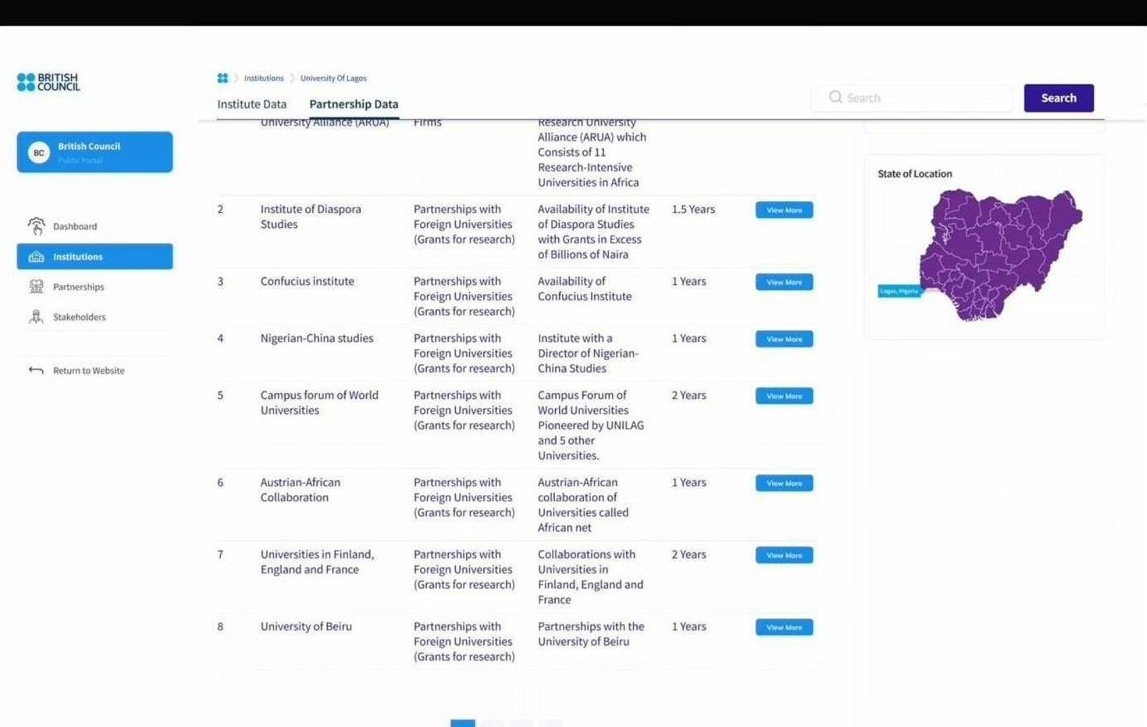
I wrote the System Requirements Specification, prioritised features on a value–effort grid, and designed an IA covering the Partnership Dashboard, Institution Profiles, Research Insights Hub and Application Forms. Over 30 wireframes became 40+ responsive screens with role-based views (admin, institution, public), a zone map of active partnerships, a 5-step application with autosave and a live match preview, and a component-based design system meeting WCAG 2.1 AA.
From inbox to infrastructure
The portal enabled 5× more transnational education applications in the first 60 days after launch, cut administrative processing time by 60%, and became the first digital source of truth for TNE opportunities in Nigeria, used by 200+ institutions.
Leading while learning the domain
I had to move between product ownership, research and design while learning a new domain fast. Next time I'd set go/no-go success metrics up front to stop scope creep, bring policy and legal experts into ideation, and start content strategy and UX writing earlier.