This wasn't meant to be an AI app
The brief was practical: help farmers share knowledge, schedule harvests and forecast yield, get timely advice on pests and weather, and collaborate across the farm ecosystem. Younger people are leaving farming, weather is less predictable, and modern practices and market prices rarely reach smallholders. The opportunity was a light, centralised library of agricultural knowledge that also makes farming attractive to a younger generation.
270 voices before a single screen
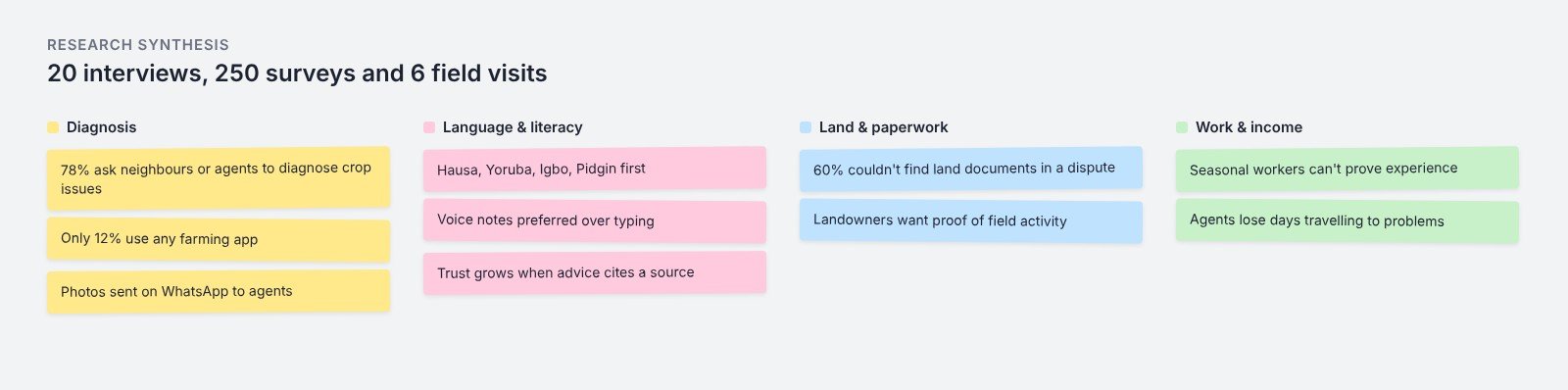
I ran 20 in-depth interviews with farmers, extension agents, landowners and seasonal workers, a survey of 250 to quantify pain points and language preferences, and 6 contextual visits on farms.
- 78% of farmers rely on neighbours or agents to diagnose crop issues; only 12% use an app
- 60% couldn't find their land documents when a dispute came up
- Language and literacy were the main barriers, not interest in technology
Four people the product had to serve
Smallholder farmer (primary, 36, Hausa and Pidgin): wants to cut crop loss and hire reliable workers; frustrated by language barriers and counterfeit advice. Extension agent (42, Igbo and Pidgin): wants more clients; wastes time travelling to problems that could be triaged remotely. Landowner (55, Swahili and English): needs to audit field activity and harvest shares. Seasonal worker (24, Hausa and Pidgin): needs to prove experience and find fair-paid work.
Voice first, evidence always
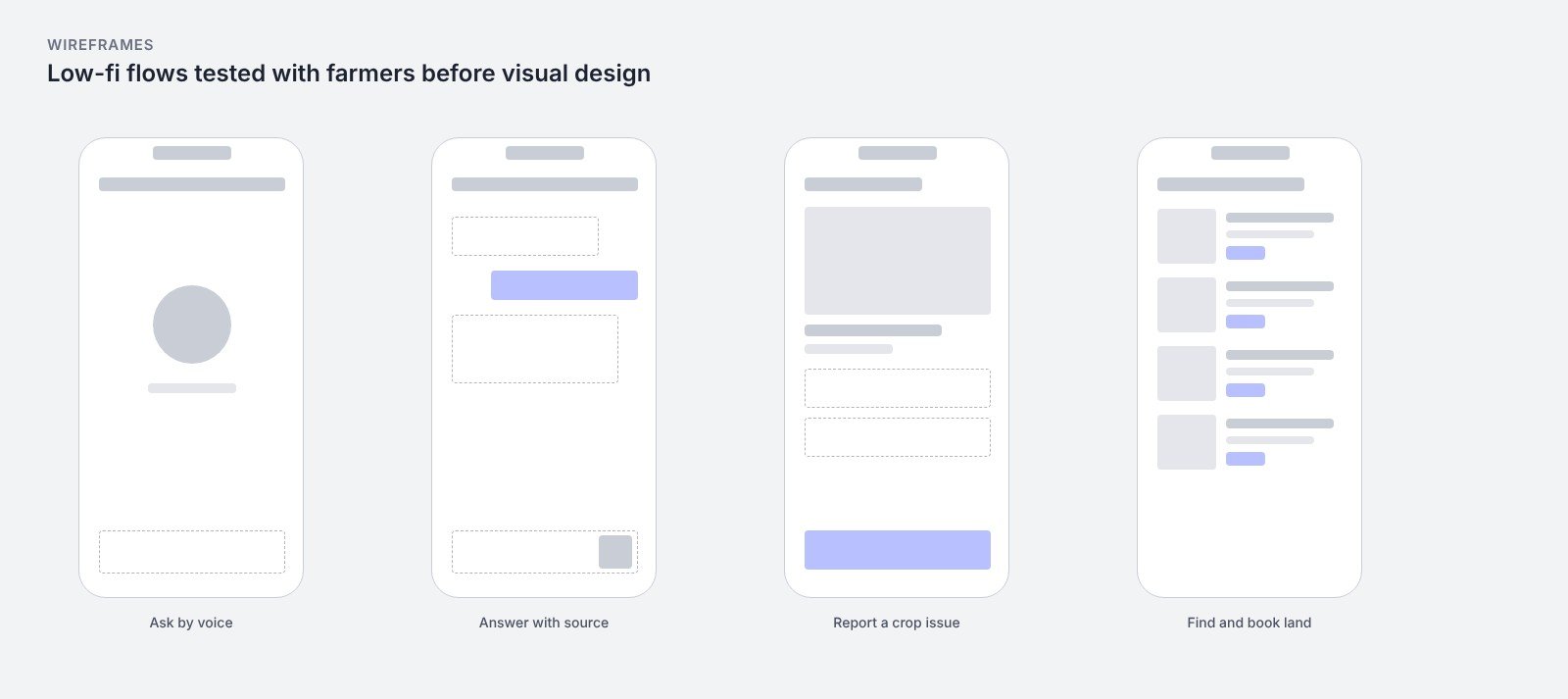
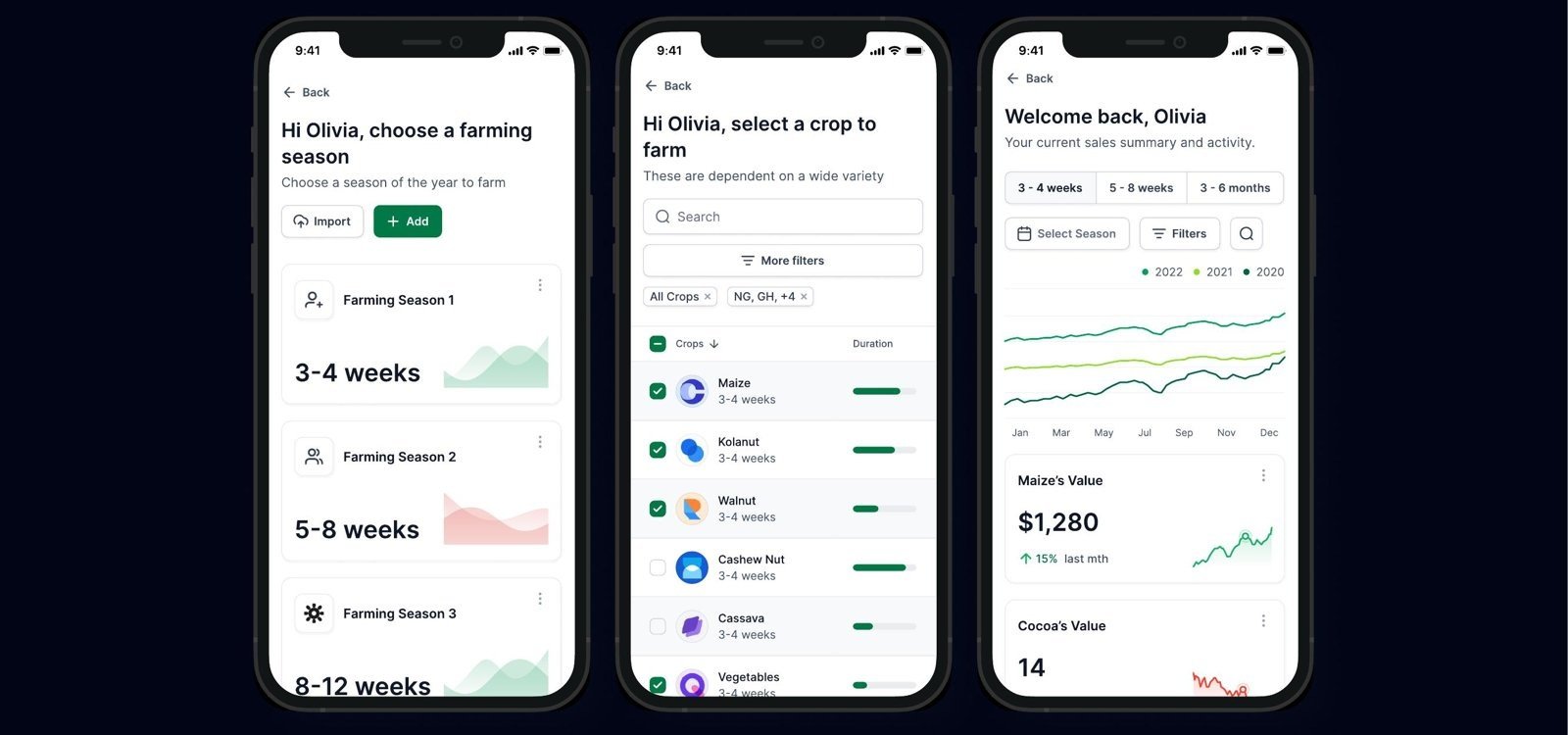
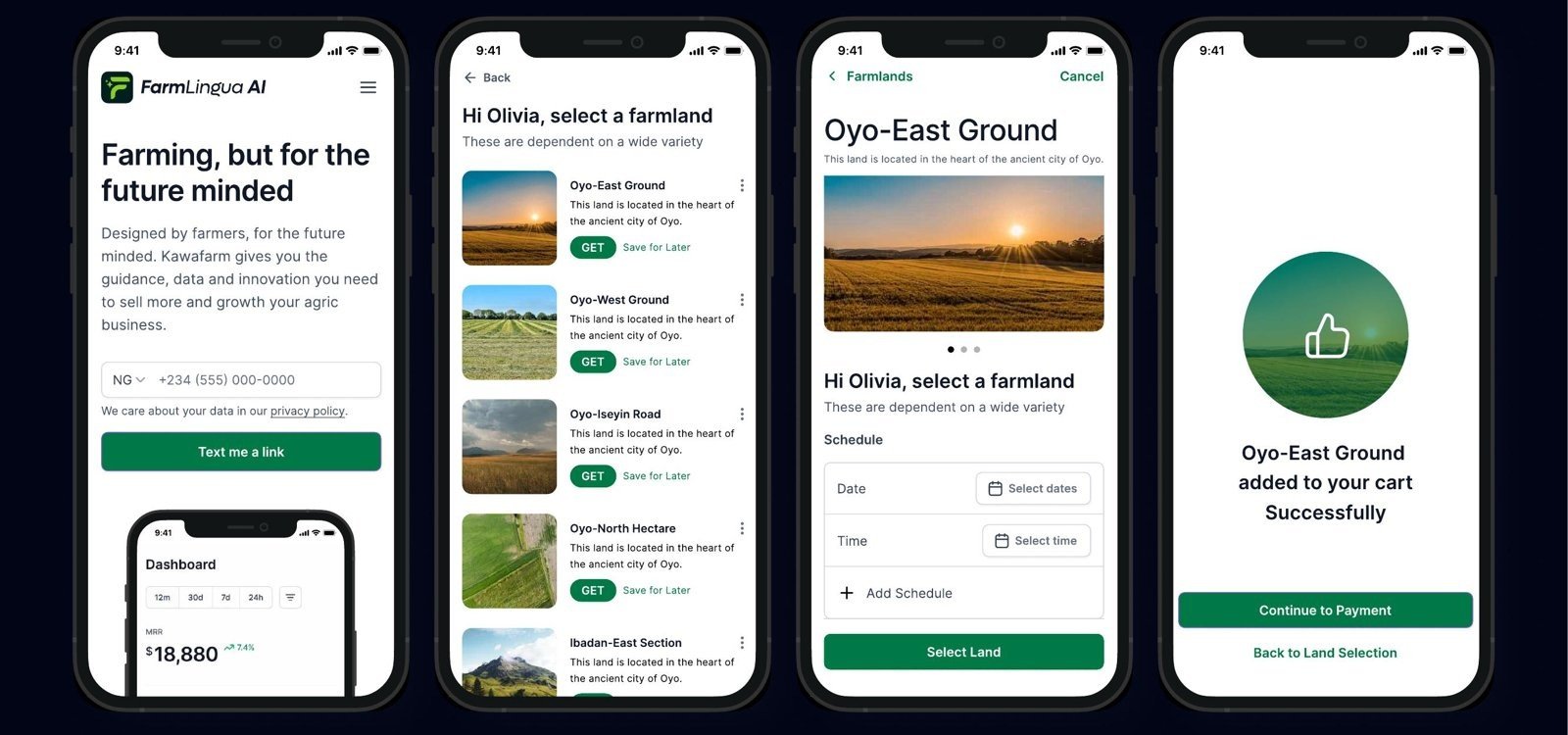
The MVP shipped 8 features: multi-persona onboarding, language choice with the FarmLingua chatbot (voice and text), produce management with a cost estimator, document storage for contracts and land agreements, issue detection cards with photos and risk score, an issue-resolution workflow that assigns an agent, harvest scheduling and worker booking. Every AI answer cites its source (for example a state agricultural alert), can be read aloud, and offers 'Helpful?' feedback.
Funded to scale
FarmLingua was awarded $45,000 from the Beneficial AI Solutions pool (BGI Nexus 1) and presented at the Beneficial AGI Summit 2025; 2 of 5 funding milestones were complete at the time of this case study.
Let research change the product
The biggest decision was letting research overturn the brief. A dashboard-first app would have served the 12% who already use apps; a voice assistant in their own language reaches everyone else. Next, I'd measure diagnosis accuracy and time-to-resolution per language to prove the model works equally well for every group.